Best Cat Food for Indoor Cats: How to Choose the Right Diet
Indoor cats live a comfortable and protected life, but their lifestyle is very different from outdoor cats. Because indoor cats are usually less active, their nutritional needs require special attention. Choosing the right food helps prevent weight gain, digestive issues, and long-term health problems.
Understanding what makes a good diet for indoor cats allows you to support their health and happiness every day.
1. Why Indoor Cats Need a Different Diet
Indoor cats burn fewer calories because they spend most of their time resting or playing indoors. Without the right diet, this can lead to weight gain and low energy levels.
A proper indoor cat diet helps with:
- Weight management
- Hairball control
- Digestive health
Nutrition should match your cat’s lifestyle.
2. Key Nutrients for Indoor Cats
When choosing food for indoor cats, focus on balanced nutrition rather than calories alone.
Important nutrients include:
- High-quality animal protein
- Moderate fat levels
- Fiber for digestion and hairball control
- Essential vitamins and minerals
Protein supports muscle health, even for less active cats.
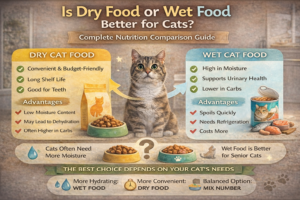
3. Dry Food vs Wet Food for Indoor Cats
Both dry and wet food can work well for indoor cats when used correctly.
Dry food:
- Easy to measure portions
- Helps maintain dental health
Wet food:
- Higher moisture content
- Supports hydration
- Often easier to digest
Many cat owners choose a combination of both.
To understand food basics, read:
👉 What Do Cats Eat? A Simple Guide to Healthy Cat Nutrition
4. Portion Control and Feeding Schedule
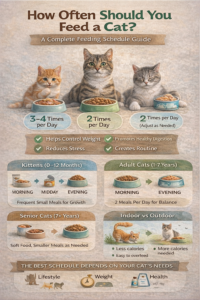
Overfeeding is a common issue with indoor cats. Even healthy food can cause weight problems if portions are too large.
For proper feeding routines, see:
👉 How Often Should You Feed a Cat? A Simple Feeding Schedule Guide
Consistent portion sizes help maintain a healthy weight.
5. Avoiding Common Feeding Mistakes
Some feeding habits can negatively affect indoor cats.
Avoid:
- Free-feeding all day
- Too many treats
- Sudden food changes
Gradual adjustments protect your cat’s digestive system.
6. Signs the Food Is Not Suitable
Your cat’s body gives clear signals when food is not working.
Watch for:
- Weight gain or loss
- Low energy
- Digestive discomfort
- Dull coat
If appetite changes suddenly, it may indicate stress or health issues:
👉 Why Won’t My Cat Eat? Common Reasons & Practical Solutions
7. Supporting Long-Term Health
A healthy diet is one part of overall care. Clean living space, mental stimulation, and routine observation all matter.
For daily habits that support wellness, read:
👉 How to Keep Your Cat Healthy: Simple Daily Habits That Really Work
Conclusion
Choosing the best cat food for indoor cats is about balance, portion control, and quality ingredients. A diet that matches your cat’s indoor lifestyle helps prevent common health issues and keeps your cat active and comfortable.
By making informed food choices and maintaining a consistent feeding routine, you give your indoor cat the best foundation for a healthy life.