
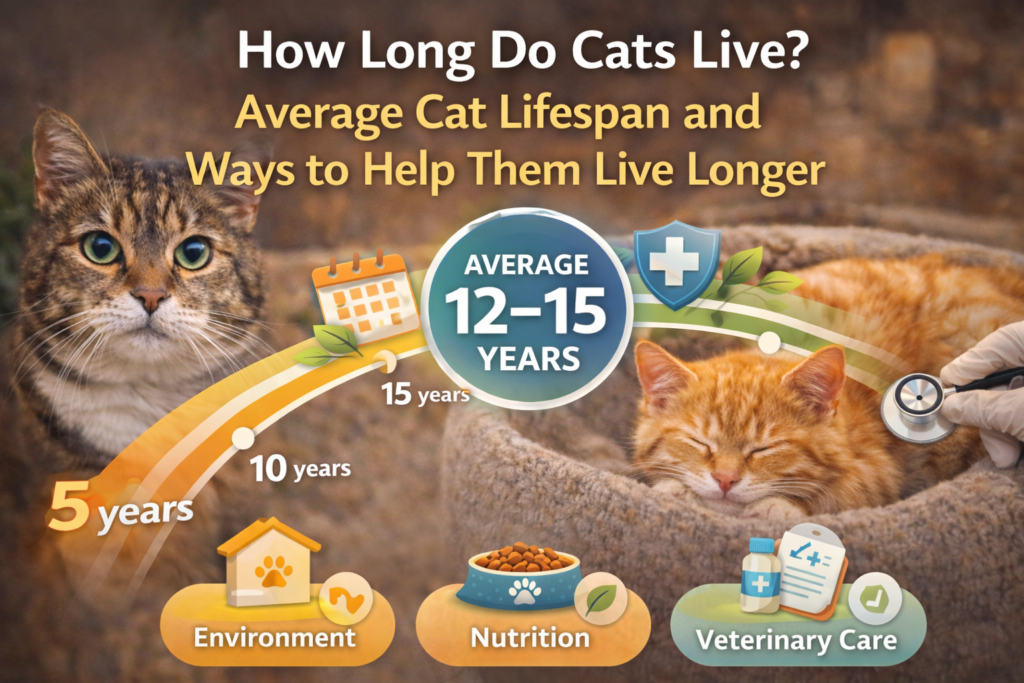
One of the most common questions cat owners ask is: How long do cats live?
While there is no single answer, a cat’s lifespan depends on several factors such as lifestyle, health care, nutrition, and environment.
Understanding what affects a cat’s lifespan helps owners make better decisions that can significantly extend their cat’s life.
1. Average Cat Lifespan
On average, cats live between 12 and 15 years, but many cats live much longer with proper care.
General lifespan ranges:
- Indoor cats: 12–18 years
- Outdoor cats: 5–10 years
- Some cats live 20+ years with excellent care
Lifestyle plays a major role in longevity.
To understand lifestyle differences, read:
👉 Indoor vs Outdoor Cats: Which Is Healthier and Safer?
2. Indoor vs Outdoor Cats and Lifespan
Indoor cats are generally safer and live longer because they are protected from:
- Traffic accidents
- Predators
- Infectious diseases
Outdoor cats face more risks, which often shortens their lifespan.
3. Nutrition and Its Impact on Lifespan
A balanced diet is one of the most important factors affecting how long a cat lives.
Cats need:
- High-quality protein
- Proper portion sizes
- Fresh water at all times
For food basics, read:
👉 What Do Cats Eat? A Simple Guide to Healthy Cat Nutrition
For indoor-specific diets:
👉 Best Cat Food for Indoor Cats: How to Choose the Right Diet
4. Feeding Routine and Weight Control
Overfeeding and obesity can significantly shorten a cat’s life. Maintaining a consistent feeding schedule helps control weight and prevents health issues.
Learn more here:
👉 How Often Should You Feed a Cat? A Simple Feeding Schedule Guide
Healthy weight = longer life.
5. Daily Care and Hygiene
Simple daily habits contribute to long-term health.
Good care includes:
- Clean litter box
- Grooming
- Clean food and water bowls
For beginners and daily routines:
👉 How to Take Care of a Cat: A Complete Beginner’s Guide
6. Stress and Emotional Health
Chronic stress can weaken a cat’s immune system and reduce lifespan.
Common stress causes:
- Loud environments
- Frequent changes
- Lack of routine
If your cat shows signs of anxiety, read:
👉 How to Calm a Stressed Cat: Simple and Effective Ways That Work
A calm cat is usually a healthier cat.
7. Regular Veterinary Care
Routine vet visits help detect health problems early.
Veterinary care supports:
- Vaccinations
- Dental health
- Early disease detection
Early treatment can add years to a cat’s life.
8. Warning Signs That Affect Lifespan
Never ignore sudden changes such as:
- Loss of appetite
- Weight loss
- Low energy
If eating habits change:
👉 Why Won’t My Cat Eat? Common Reasons & Practical Solutions
Early action saves lives.
Conclusion
So, how long do cats live?
With proper nutrition, a safe environment, regular veterinary care, and emotional stability, cats can live long, healthy, and happy lives.
By making informed decisions every day, you can significantly increase your cat’s lifespan and quality of life.