
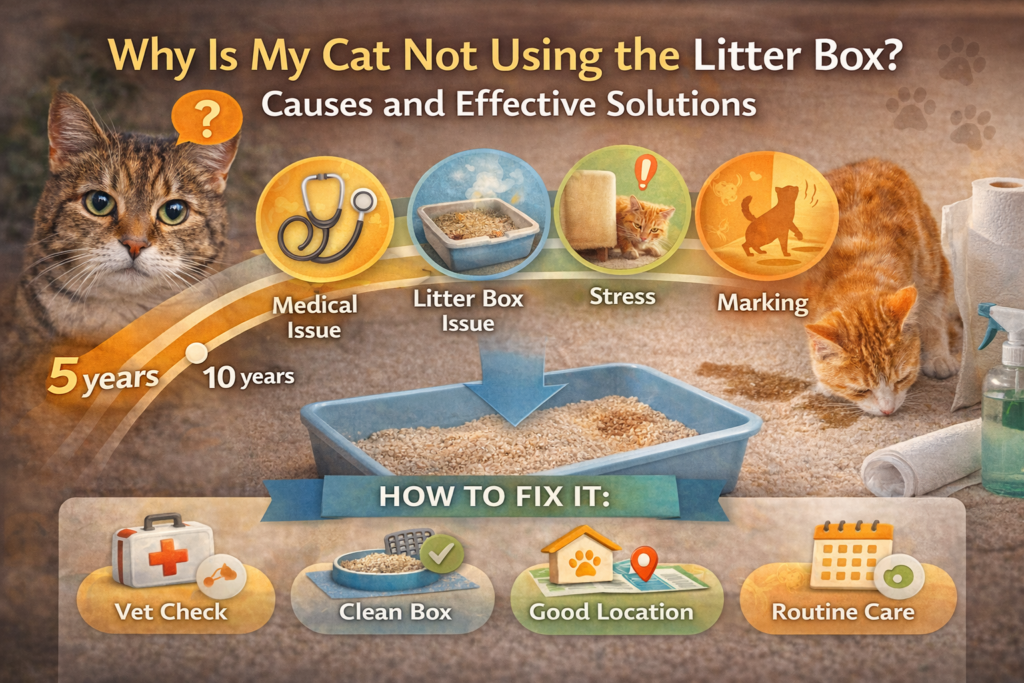
Why Is My Cat Not Using the Litter Box? Causes and Effective Solutions
One of the most frustrating problems cat owners face is when their cat suddenly stops using the litter box. If you’re asking yourself, “Why is my cat not using the litter box?”, you’re not alone. This behavior is common, but it always has a reason behind it.
Cats are naturally clean animals. When they avoid the litter box, it is usually a sign of stress, discomfort, or a medical issue. Understanding the cause is the first step toward solving the problem effectively and safely.
1. Medical Issues May Be the Cause
Before assuming it’s a behavioral problem, always consider medical reasons.
Common health-related causes include:
- Urinary tract infections
- Bladder inflammation
- Kidney problems
- Digestive disorders
If your cat shows symptoms like:
- Straining to urinate
- Blood in urine
- Frequent litter box visits
- Crying while urinating
You should contact a veterinarian immediately.
Learn more about warning signs here:
👉 Common Cat Health Problems: Symptoms, Causes, and Prevention Tips
2. The Litter Box Is Not Clean Enough
Cats are extremely sensitive to cleanliness. A dirty litter box is one of the most common reasons for avoidance.
Make sure:
- The litter box is cleaned daily
- Waste is removed regularly
- The box is washed weekly
- The litter is fresh
Even a slightly dirty box can discourage a cat from using it.
3. The Location of the Litter Box
Placement matters more than many owners realize.
Avoid placing the litter box:
- Near loud appliances
- In high-traffic areas
- Near food and water bowls
Cats prefer quiet, private spaces. Moving the litter box to a calmer location can often solve the issue quickly.
4. Changes in Environment or Stress
Stress is a major factor in litter box problems.
Common stress triggers include:
- Moving to a new home
- Introducing new pets
- Changes in routine
- Loud noises
If stress is involved, read:
👉 How to Calm a Stressed Cat: Simple and Effective Ways That Work
Reducing stress often restores normal litter habits.
5. The Type of Litter
Cats can be picky about litter texture and scent.
Problems may occur if:
- You changed the litter brand suddenly
- The litter has a strong fragrance
- The texture feels uncomfortable
When switching litter types, do it gradually to avoid confusion.
6. Not Enough Litter Boxes
A common rule among veterinarians is:
One litter box per cat, plus one extra.
For example:
- 1 cat = 2 litter boxes
- 2 cats = 3 litter boxes
Competition or territorial issues can lead to avoidance if there are too few boxes.
7. Age-Related Problems
Senior cats may experience mobility issues that make it difficult to access the litter box.
Older cats may struggle with:
- High-sided litter boxes
- Climbing stairs
- Arthritis
Providing a lower-sided litter box can help aging cats.
To understand aging better:
👉 How Long Do Cats Live? Average Cat Lifespan and Ways to Help Them Live Longer
8. Marking vs. Litter Box Avoidance
It’s important to distinguish between spraying and avoiding the litter box.
Spraying usually:
- Happens on vertical surfaces
- Is related to territorial behavior
Litter box avoidance:
- Happens on floors
- Is often medical or stress-related
Understanding the difference helps you apply the right solution.
9. How to Fix the Problem Step by Step
Follow this structured approach:
Step 1:
Rule out medical issues with a vet check.
Step 2:
Deep clean all litter boxes.
Step 3:
Adjust location and ensure privacy.
Step 4:
Maintain consistent routine.
For overall care routines:
👉 How to Take Care of a Cat: A Complete Beginner’s Guide
10. Preventing Future Litter Box Problems
Prevention is easier than correction.
Best practices:
- Maintain cleanliness
- Reduce stress
- Provide proper nutrition
- Monitor health regularly
Diet also plays a role in urinary health:
👉 What Do Cats Eat? A Simple Guide to Healthy Cat Nutrition
Conclusion
If your cat is not using the litter box, there is always a reason behind it. Whether medical, environmental, or behavioral, identifying the cause early allows you to fix the issue effectively.
With proper observation, cleanliness, and routine care, most litter box problems can be resolved quickly and safely. Patience and consistency are key to restoring your cat’s comfort and confidence.