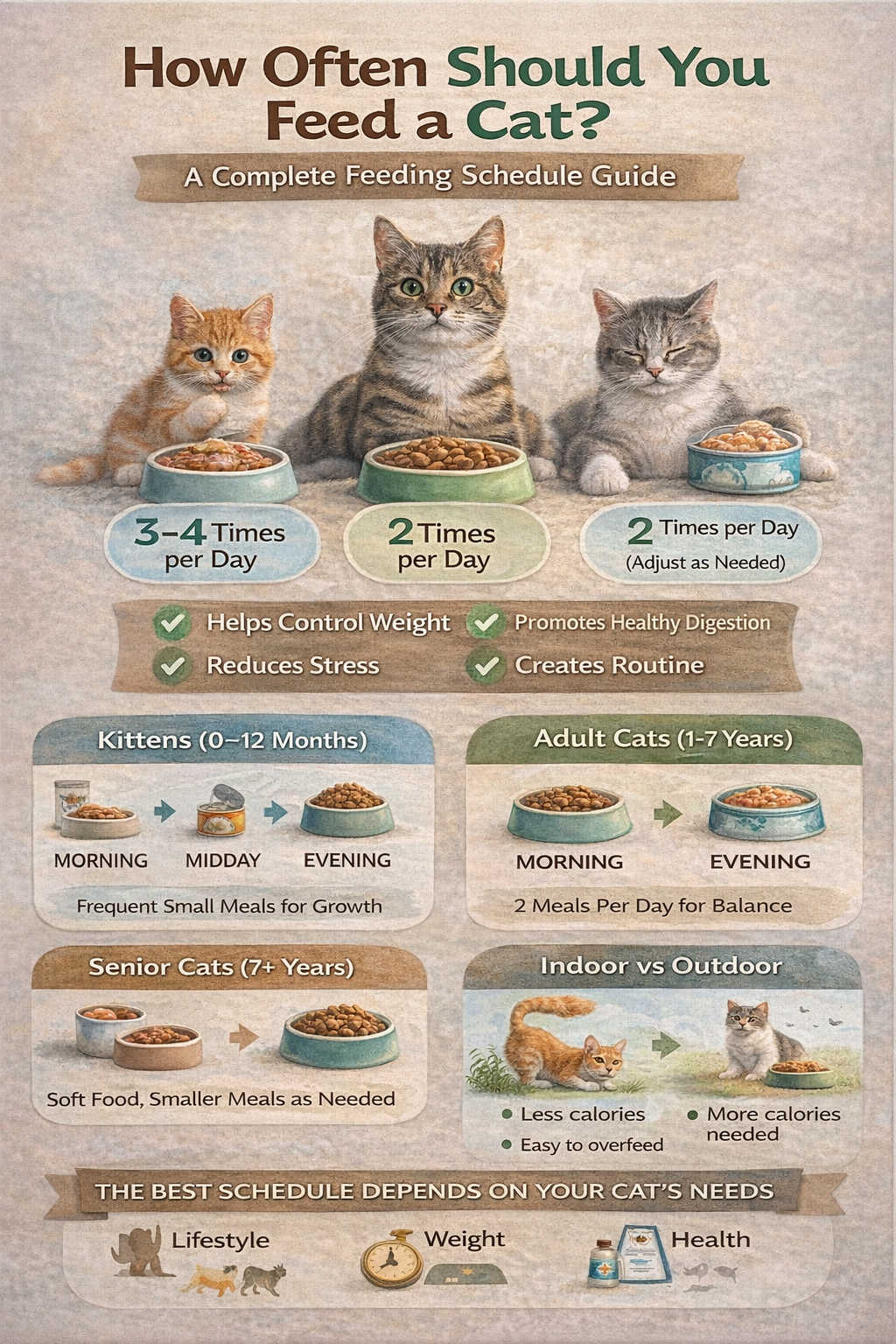
Feeding your cat the right amount at the right time is one of the most important responsibilities of pet ownership. Many cat owners ask, “How often should you feed a cat?” The answer depends on several factors, including your cat’s age, health condition, activity level, and whether they live indoors or outdoors.
A proper feeding schedule helps prevent obesity, supports digestive health, and keeps your cat’s energy levels stable throughout the day. In this complete guide, you’ll learn exactly how often to feed your cat and how to adjust portions according to their specific needs.
Why Feeding Schedule Matters
Cats thrive on routine. Unlike humans, they prefer predictable daily patterns. Feeding at consistent times:
- Supports healthy digestion
- Reduces stress
- Prevents overeating
- Helps manage weight
Inconsistent feeding habits can lead to obesity or behavioral problems such as excessive meowing.
If your cat frequently cries for food, you may also want to read:
👉 Why Is My Cat Meowing So Much? Common Reasons and Practical Solutions
How Often Should You Feed a Kitten?
Kittens have high energy needs and smaller stomachs. They require more frequent meals compared to adult cats.
Recommended Feeding Frequency for Kittens:
- 0–3 months: 4 small meals per day
- 3–6 months: 3 meals per day
- 6–12 months: 2–3 meals per day
Kittens grow rapidly, so regular feeding supports proper development.
You can learn more about balanced nutrition here:
👉 What Do Cats Eat? A Simple Guide to Healthy Cat Nutrition
Feeding Schedule for Adult Cats
Most healthy adult cats do well with:
✔ 2 meals per day
✔ Morning and evening feeding
This mimics natural hunting patterns. In the wild, cats hunt multiple small prey items, but for domestic cats, two balanced meals are usually sufficient.
Feeding Senior Cats
Senior cats (typically 7+ years) may have different needs depending on their health.
Some older cats:
- Lose appetite
- Develop dental issues
- Need softer food
In many cases, maintaining 2 meals per day is still ideal, but portion size may need adjustment.
To understand aging better:
👉 How Long Do Cats Live? Average Cat Lifespan and Ways to Help Them Live Longer
Free Feeding vs Scheduled Feeding
One common debate is whether to leave food available all day (free feeding) or follow a strict schedule.
Free Feeding
Pros:
- Convenient
- Allows grazing
Cons:
- Can lead to obesity
- Hard to monitor appetite changes
Scheduled Feeding
Pros:
- Better weight control
- Easier to detect health problems
- Creates routine
For most indoor cats, scheduled feeding is the healthier option.
How Much Food Should You Give?
Feeding frequency is only part of the equation. Portion size is equally important.
Factors affecting portion size:
- Weight
- Activity level
- Type of food (dry vs wet)
- Health conditions
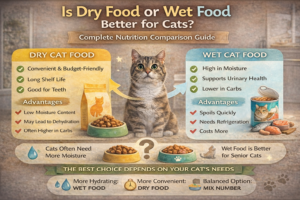
For example, dry food is more calorie-dense than wet food.
For a full comparison:
👉 Is Dry Food or Wet Food Better for Cats? A Complete Nutrition Comparison Guide
Signs You Are Feeding Too Much
Overfeeding is one of the biggest problems among indoor cats.
Warning signs:
- Visible belly fat
- Reduced activity
- Difficulty grooming
- Rapid weight gain
Obesity increases the risk of diabetes and joint issues.
Learn more about health risks here:
👉 Common Cat Health Problems: Symptoms, Causes, and Prevention Tips
Signs You Are Not Feeding Enough
Underfeeding can also be harmful.
Signs include:
- Weight loss
- Constant hunger behavior
- Low energy
- Poor coat condition
If your cat refuses food completely, read:
👉 Why Won’t My Cat Eat? Common Reasons & Practical Solutions
Indoor vs Outdoor Feeding Differences
Indoor cats:
- Less active
- Require controlled portions
Outdoor cats:
- Burn more calories
- May need slightly larger portions
Lifestyle plays a significant role in determining feeding frequency and portion size.
Creating a Healthy Feeding Routine
To create a stable feeding routine:
- Feed at the same times every day
- Measure portions carefully
- Avoid too many treats
- Provide fresh water at all times
- Monitor weight monthly
Cats respond positively to consistency.
Frequently Asked Questions
Should I feed my cat once or twice a day?
Most adult cats should be fed twice daily for optimal digestion and weight control.
Can I leave dry food out all day?
It’s possible, but it increases the risk of overeating.
Is it bad to change feeding times?
Sudden changes can cause stress. Always adjust gradually.
Final Recommendation
So, how often should you feed a cat?
- Kittens: 3–4 times daily
- Adults: 2 times daily
- Seniors: 2 times daily (adjust as needed)
The key is consistency, portion control, and paying attention to your cat’s body condition.
Feeding your cat properly is one of the simplest yet most powerful ways to support long-term health and well-being.