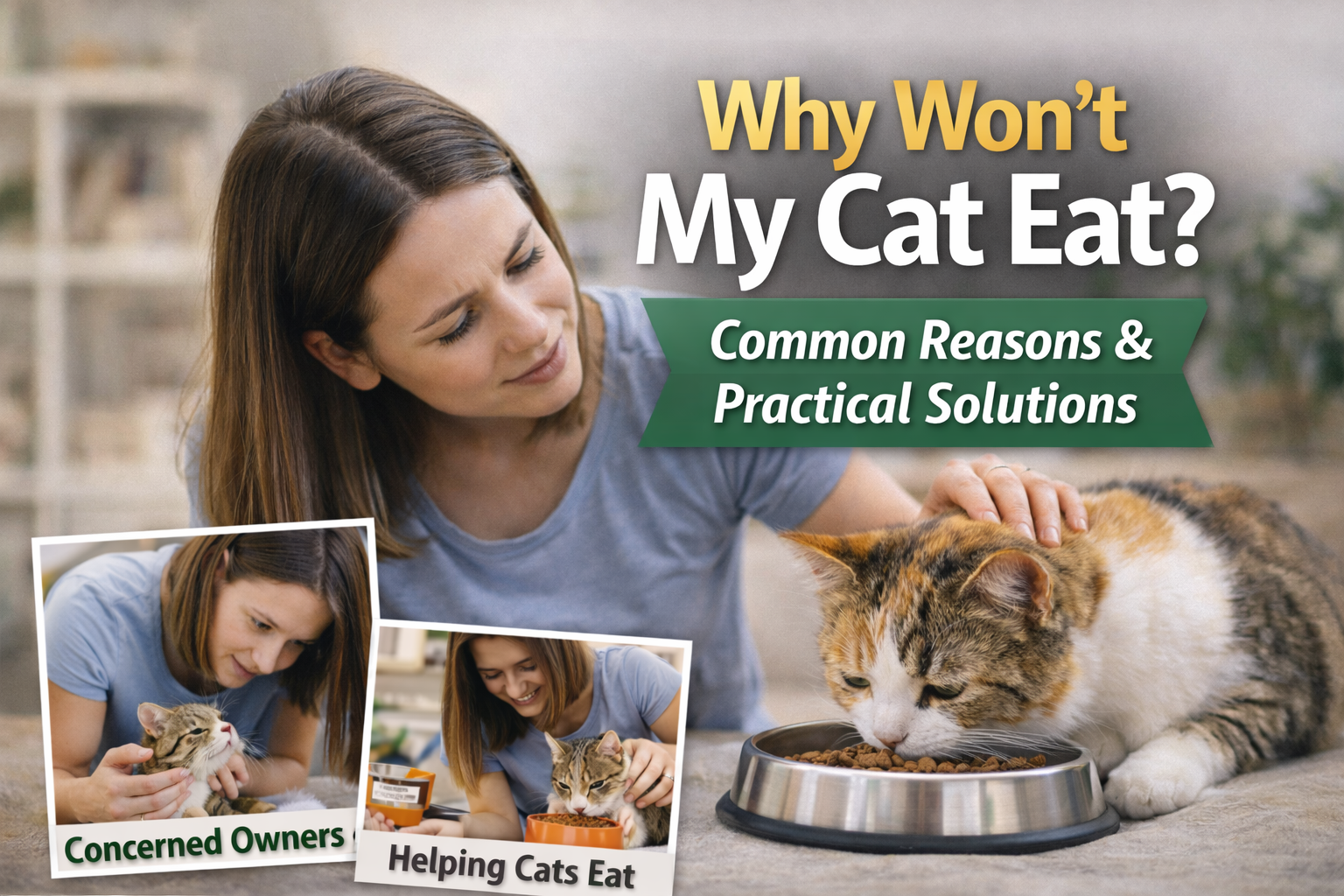

Why Won’t My Cat Eat? Common Reasons & Practical Solutions
It’s always worrying when a cat stops eating. Eating less or refusing food can be a sign that something is not right, and knowing why it happens helps you respond quickly and appropriately.
Understanding the possible reasons behind appetite changes and offering practical solutions can help your cat return to normal eating habits.
1. Stress and Environmental Changes
Cats are sensitive creatures. Changes in their environment — such as moving to a new house, new pets, loud noises, or rearranged furniture — can make them feel stressed and reduce their appetite.
What to do:
- Keep your cat in a quiet space
- Avoid sudden changes
- Spend calm time with your cat
Stress often leads to reduced eating and increased hiding. Be patient and give your cat time to adjust.
2. Dental Pain or Oral Issues
Cats with dental problems often find eating painful. Gum disease, broken teeth, or mouth sores can cause a cat to refuse food.
Signs to look for:
- Drooling
- Bad breath
- Pawing at the mouth
If you suspect oral pain, it’s best to consult a veterinarian for a dental checkup.
3. Illness and Underlying Health Problems
Health issues like infections, gastrointestinal problems, or kidney disease can lead to appetite loss.
Some common symptoms that accompany a lack of appetite:
- Vomiting
- Diarrhea
- Lethargy
- Weight loss
These signs might indicate a deeper problem that requires medical attention.
4. Food Preferences and Quality
Sometimes cats refuse to eat because they do not like the food’s smell, flavor, or texture. This is especially true if you recently switched brands or introduced new food.
Tips for better feeding:
- Offer fresh, high-quality food
- Try a mix of wet and dry food
- Warm the food slightly to enhance aroma
Cats can be picky; experimenting with taste and texture can help them restart eating.
5. Too Frequent Changes in Diet
Changing a cat’s food too quickly can upset their stomach and make them reluctant to eat.
What to do:
- Mix old and new food gradually
- Increase the new food ratio over 5–7 days
This gradual transition helps the digestive system adapt without discomfort.
6. Age and Feeding Needs
Kittens, adult cats, and senior cats have different feeding needs.
As cats age, they might eat less or become more selective.
For example:
- Kittens need multiple meals per day
- Older cats may need softer, easier-to-chew food
Adjust the diet based on your cat’s life stage and consult your vet for tailor-made advice.
7. Emotional Wellbeing and Bonding
Sometimes cats eat more when they feel secure and loved. Spending quality time playing and interacting can positively affect their desire to eat.
Try:
- Gentle play before meal times
- Praise and calm attention during feeding
Happy cats often show improved appetite.
When to See a Vet
If your cat refuses food for more than 24–48 hours, it’s important to seek veterinary help, especially if other symptoms appear. Appetite loss can be caused by serious conditions that need professional treatment.
Conclusion
A cat that stops eating can be the result of many factors — stress, dental issues, diet preferences, illness, or changes in routine. By observing your cat’s behavior and offering gentle care, you can often help them return to normal eating habits.
However, when in doubt, always consult your veterinarian. Early intervention protects your cat’s health and prevents complications.
For general cat care tips and health advice, see our complete guide on how to take care of a cat.