
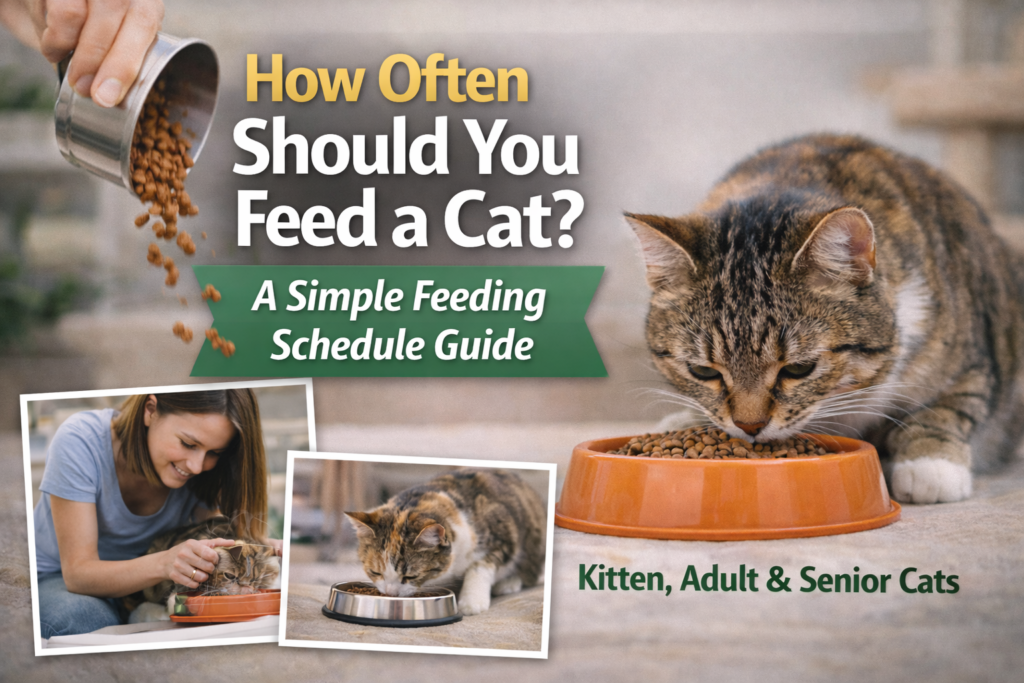
How Often Should You Feed a Cat? A Simple Feeding Schedule Guide
Feeding a cat the right way is not only about choosing good food, but also about knowing how often your cat should eat. Many cat owners feel confused about feeding schedules, especially when their cat seems hungry all the time or refuses food.
Understanding proper feeding frequency helps maintain your cat’s health, energy, and weight.
1. Why Feeding Schedule Matters
Cats thrive on routine. A consistent feeding schedule helps regulate digestion, prevent overeating, and reduce stress.
An irregular feeding pattern may lead to:
- Weight gain
- Digestive problems
- Food-related behavior issues
Creating a stable routine makes your cat feel safe and comfortable.
2. How Often Should You Feed a Kitten?
Kittens grow quickly and need more energy than adult cats.
General guidelines:
- Up to 6 months: 3–4 small meals per day
- 6–12 months: 2–3 meals per day
Frequent meals support healthy growth and development.
3. Feeding Adult Cats
Most adult cats do well with a regular routine.
Recommended schedule:
- 2 meals per day (morning and evening)
This helps control hunger and prevents overeating. Portion size is just as important as meal frequency.
4. Feeding Senior Cats
As cats age, their metabolism and digestion change.
Senior cats may benefit from:
- Smaller, more frequent meals
- Softer food options
- Careful monitoring of appetite
If your cat suddenly eats less, it may be a health-related issue.
5. Wet Food vs Dry Food Timing
The type of food also affects feeding schedules.
- Dry food can be divided into measured portions
- Wet food should be served at set times and not left out too long
Many owners combine both for balance and hydration.
6. Signs You May Be Feeding Too Much or Too Little
Watch your cat’s behavior and body condition.
Signs of overfeeding:
- Weight gain
- Low activity
Signs of underfeeding:
- Constant hunger
- Weight loss
Adjust portions gradually and observe changes.
7. When Appetite Changes Suddenly
If your cat suddenly stops eating or eats much less, it could be linked to stress or health issues.
For deeper insight, read:
👉 Why Won’t My Cat Eat? Common Reasons & Practical Solutions
Conclusion
Knowing how often to feed your cat is essential for long-term health. Feeding schedules should be based on age, lifestyle, and individual needs.
By maintaining a consistent routine and offering balanced meals, you help your cat stay healthy, active, and happy.
If your cat suddenly refuses food, there may be an underlying reason you should not ignore.