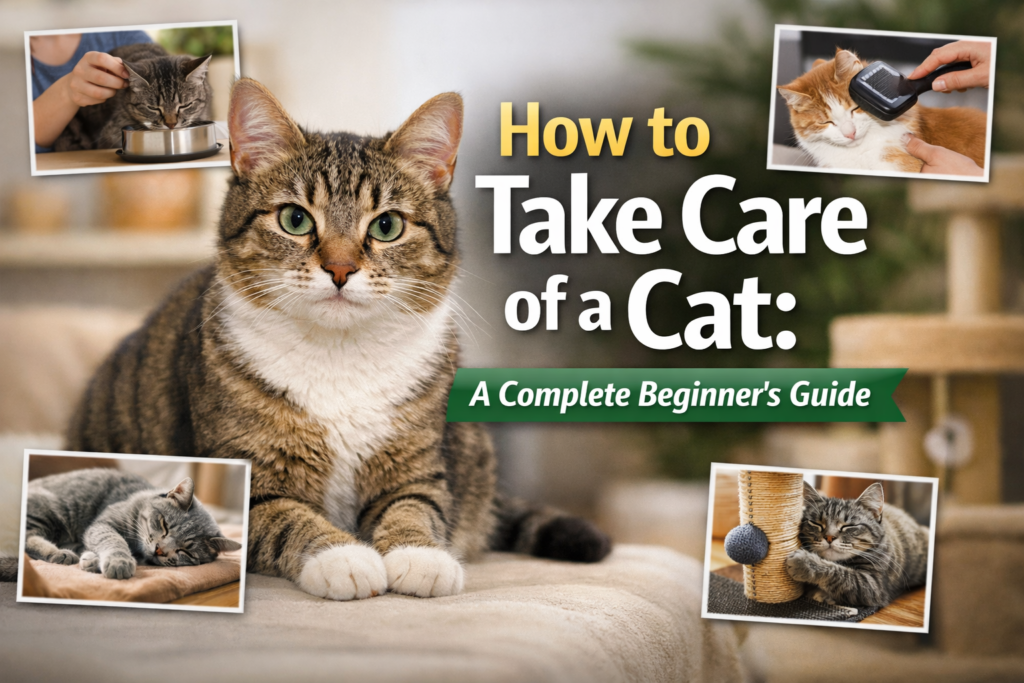
How to Take Care of a Cat: A Complete Beginner’s Guide
How to Take Care of a Cat: A Complete Beginner’s Guide
Bringing a cat into your home is a rewarding experience, but it also comes with responsibility. Cats may seem independent, but they still need proper care, attention, and a safe environment to live a healthy and happy life.
If you are a new cat owner, this guide will help you understand the basics of cat care in a simple and practical way.
1. Providing a Safe and Comfortable Home
A cat needs a calm and secure space to feel comfortable. Make sure your home is clean, quiet, and free from dangerous objects such as toxic plants, sharp items, or exposed wires.
Your cat should have:
A cozy sleeping area
Access to fresh water at all times
A clean litter box placed in a quiet corner
Cats feel safer when they have their own space to rest and observe their surroundings.
2. Feeding Your Cat Properly
Proper nutrition is one of the most important parts of cat care. Cats need a balanced diet that supports their growth, energy, and overall health.
Basic feeding tips:
Choose quality cat food suitable for your cat’s age
Avoid feeding human food
Follow recommended feeding portions
Always provide fresh water
Overfeeding can lead to obesity, while poor nutrition can cause health problems over time.
3. Keeping Your Cat Healthy
Regular health care helps prevent serious problems. Even if your cat looks healthy, routine check-ups are important.
Health care basics include:
Regular veterinary visits
Vaccinations
Parasite prevention
Watching for changes in behavior or appetite
If your cat stops eating, becomes very quiet, or shows unusual behavior, it may be a sign of illness.
4. Grooming and Hygiene
Cats are naturally clean animals, but they still need some grooming help.
Grooming tips:
Brush your cat regularly to reduce shedding
Trim nails carefully when needed
Keep the litter box clean daily
Good hygiene helps prevent skin issues and keeps your cat comfortable.
5. Mental Stimulation and Play
Cats need mental and physical activity to stay happy. Bored cats may develop behavioral problems.
Ways to keep your cat active:
Interactive toys
Short daily play sessions
Scratching posts
Playing with your cat also strengthens the bond between you and your pet.
6. Understanding Cat Behavior
Cats communicate through body language and behavior. Learning to understand these signals helps you respond better to your cat’s needs.
For example:
Purring often means comfort
Hiding may indicate stress
Scratching is natural behavior
Patience and observation are key to building trust with your cat.
Conclusion
Taking care of a cat does not need to be complicated. With proper nutrition, regular health care, a clean environment, and daily attention, your cat can live a healthy and happy life.
By understanding your cat’s basic needs and behavior, you become a more responsible and confident cat owner.