What Do Cats Eat? A Simple Guide to Healthy Cat Nutrition
Feeding a cat properly is one of the most important responsibilities of any cat owner. Many people assume that cats can eat almost anything, but the truth is that cats have very specific nutritional needs.
Understanding what cats eat and what foods are safe for them helps prevent health problems and ensures a long, healthy life.
1. Understanding a Cat’s Natural Diet
Cats are obligate carnivores. This means their bodies are designed to eat meat. Unlike humans or dogs, cats cannot survive on a plant-based diet.
Their natural diet requires:
- Animal protein
- Essential amino acids
- Healthy fats
- Vitamins and minerals
A lack of proper nutrients can lead to serious health issues over time.
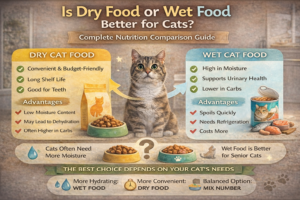
2. Commercial Cat Food Options
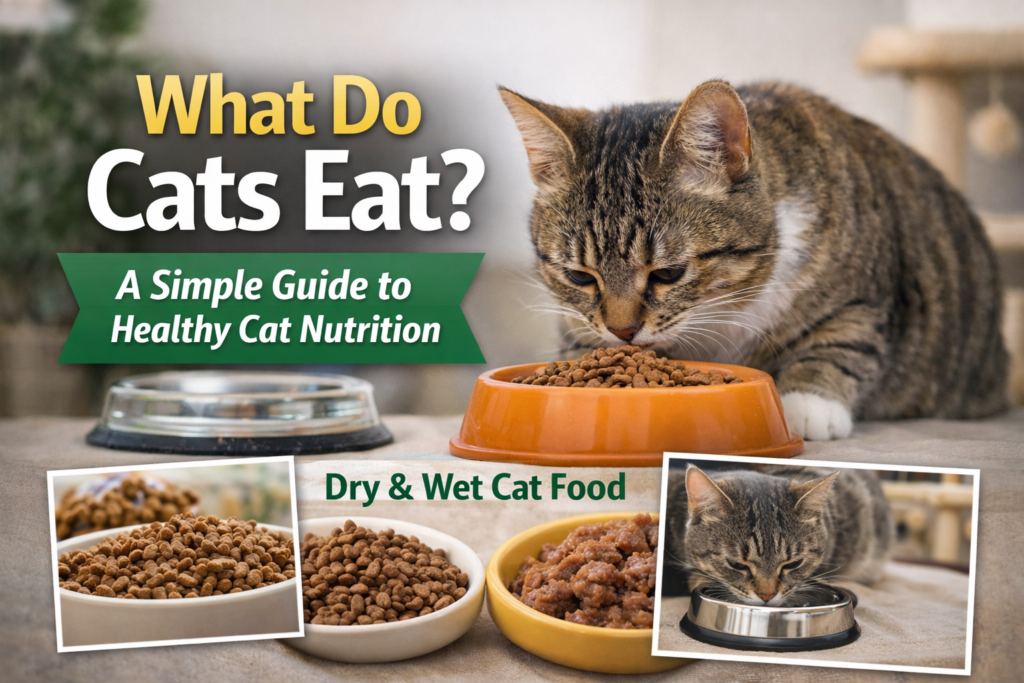
Most cat owners rely on commercial cat food because it is convenient and nutritionally balanced.
The main types include:
Dry Cat Food
- Easy to store
- Helps keep teeth clean
- Usually more affordable
Wet Cat Food
- Higher moisture content
- Helps with hydration
- Often more appealing to cats
A combination of both can be a good option for many cats.
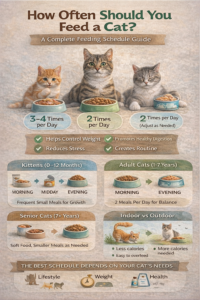
3. How Often Should You Feed a Cat?
Feeding schedules depend on age and activity level.
General guidelines:
- Kittens: multiple small meals per day
- Adult cats: 2 meals per day
- Senior cats: smaller, regular meals
Always follow the feeding instructions on the food packaging and adjust based on your cat’s needs.
4. Foods Cats Should Never Eat
Some human foods are dangerous for cats and should always be avoided.
Common harmful foods include:
- Chocolate
- Onions and garlic
- Grapes and raisins
- Alcohol
- Caffeinated drinks
Even small amounts can cause serious health problems.
5. Importance of Fresh Water
Cats need constant access to clean, fresh water. Dehydration can lead to urinary and kidney problems.
Tips to encourage drinking:
- Change water daily
- Use clean bowls
- Place water away from food
Some cats prefer running water, such as water fountains.
6. Treats and Snacks
Treats should be given in moderation. Too many treats can cause weight gain and nutritional imbalance.
Choose:
- Cat-specific treats
- Small portions
- Occasional rewards only
Treats should never replace regular meals.
7. Signs of Poor Nutrition
Watch for signs that your cat’s diet may not be suitable.
Warning signs include:
- Weight loss or gain
- Dull coat
- Low energy
- Digestive issues
If you notice these signs, consider adjusting the diet and consult a veterinarian.
Conclusion
Knowing what cats eat and how to feed them properly is essential for their health and well-being. A balanced diet, proper feeding schedule, and access to fresh water can make a big difference in your cat’s quality of life.
By making informed food choices, you help your cat stay active, healthy, and happy.
Proper nutrition is an essential part of cat care. If you are new to owning a cat, you can also read our complete guide on how to take care of a cat to understand the basics of daily care.