Comparing Indoor vs. Regular Cat Food
| Feature | Indoor Cat Food | Regular Cat Food |
| Calories | Controlled / Lower | Standard / Higher |
| Fiber Content | High (for hairball control) | Moderate |
| Fat Content | Moderate to Low | Moderate to High |
| Odor Control | Often includes ingredients like Yucca | Standard |
Frequently Asked Questions (FAQs)
How much should I feed my indoor cat?
The exact amount depends on your cat’s weight, age, and the specific food brand. Generally, an average 10-pound indoor cat needs about 200 calories per day. Always check the feeding guide on the back of the cat food package and adjust accordingly.
Can I give my indoor cat treats?
Yes, but moderation is key. Treats should make up no more than 10% of your cat’s daily caloric intake. Look for low-calorie or dental treats.
Is grain-free food better for indoor cats?
Not necessarily. Unless your cat has a diagnosed grain allergy (which is rare), grains can provide necessary fiber. The most important factor is that the food is high in animal protein and formulated for indoor energy levels.
Conclusion
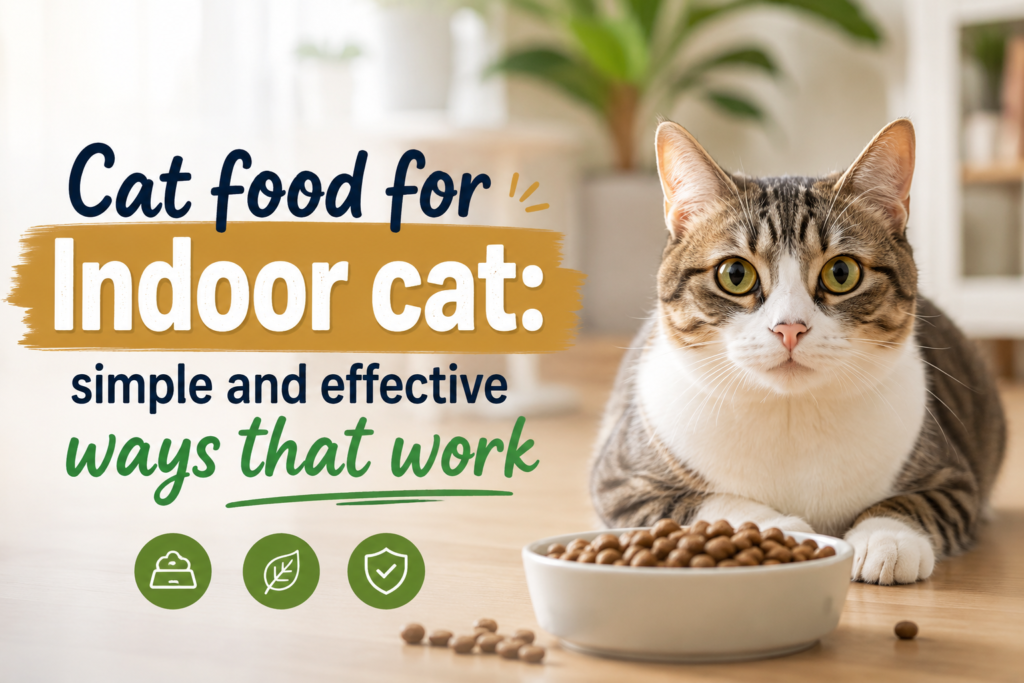
Choosing the best cat food for indoor cats comes down to understanding their unique, low-activity lifestyle. By focusing on high protein, increased fiber for hairball control, and strict portion management, you can easily maintain your cat’s ideal weight. Remember, the simplest and most effective way to keep your indoor cat thriving is to combine a high-quality diet with daily interactive playtime.