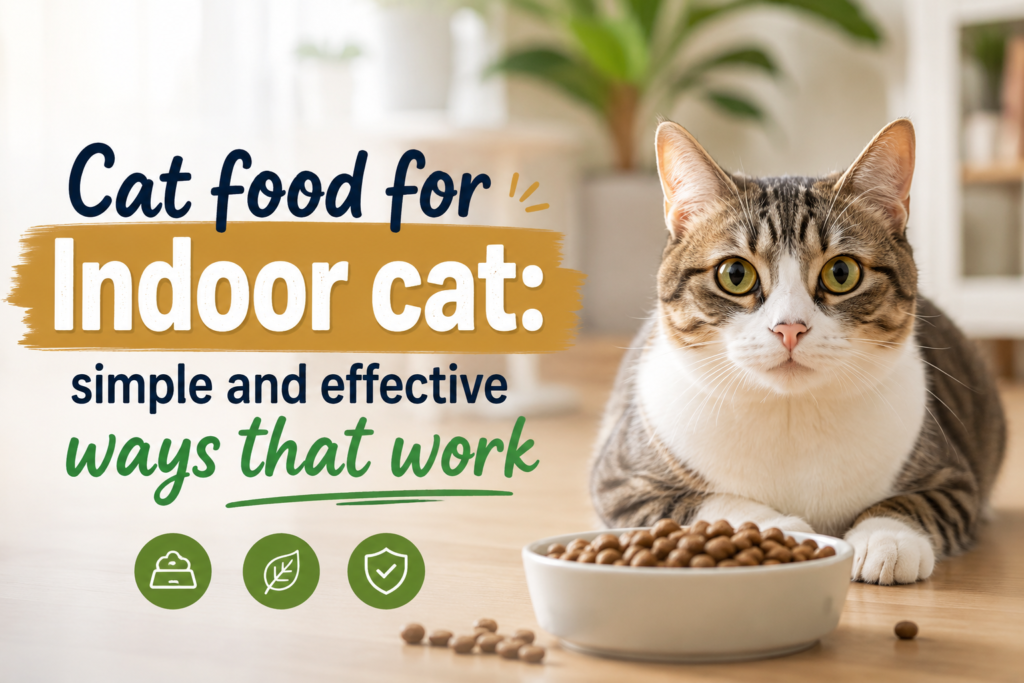
If your feline friend spends all their time lounging on the sofa and watching the world from the windowsill, their dietary needs are vastly different from an outdoor roamer. Finding the right cat food for indoor cats isn’t just about picking a random bag off the shelf; it’s about supporting a specific lifestyle.
Because indoor cats burn fewer calories and spend more time grooming, they are more prone to weight gain and hairballs. In this guide, we will break down simple and effective ways to choose the perfect indoor cat diet to keep your pet healthy, active, and happy.
Why Do Indoor Cats Need Different Food?
To understand how to feed your indoor cat, you first need to understand their daily routine. Indoor cats live in a safe, climate-controlled environment. While this keeps them protected from predators and traffic, it also means they get significantly less exercise.
Here is why an indoor-specific diet is crucial:
-
Lower Caloric Output: Less running and hunting means a slower metabolism. Standard cat food can easily lead to obesity.
-
Increased Grooming: Indoor cats spend up to 50% of their waking hours grooming. This leads to an increase in swallowed hair, causing frequent hairballs.
-
Litter Box Odors: Because they use an indoor litter box, their diet needs to promote healthy digestion to minimize strong odors.
Key Nutritional Needs for Indoor Felines
When shopping for the best cat food for indoor cats, you need to read the labels carefully. Look for these essential nutritional components:
1. High-Quality Protein
Cats are obligate carnivores. Their bodies are built to process meat. Ensure that the first ingredient on the food label is a high-quality animal protein, such as chicken, turkey, or salmon. This helps them maintain lean muscle mass without adding unnecessary fat.