How to Stop a Dog From Barking: Find the Cause, Then Train
Barking is communication, not misbehavior. Learn the main reasons dogs bark and the humane, step-by-step training methods that reduce each type.
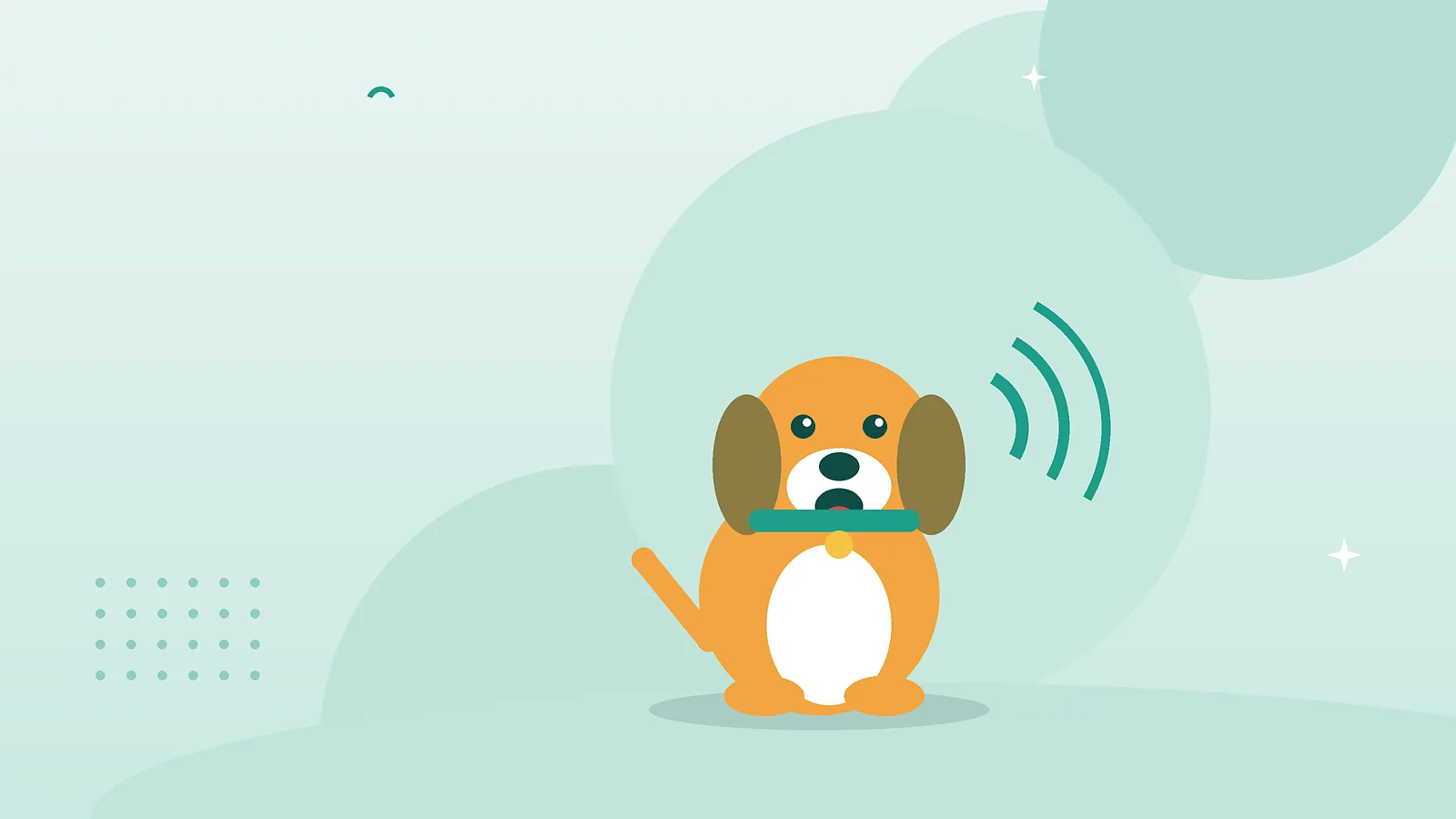
Telling a dog to "stop barking" rarely works, because barking does a job for the dog. It warns, asks, releases energy or expresses fear. The fastest way to a quieter home is to work out why your dog barks. Then you can change the situation and teach a different behavior that meets the same need.
Step 1: Identify the type of barking
| Type | What it looks like |
|---|---|
| Alert or territorial | Barking at the doorbell, passers-by or noises outside; body upright and forward |
| Attention or demand | Barking at you, often with eye contact, when you are eating, on the phone or have stopped playing |
| Boredom or frustration | Repetitive barking when left alone with nothing to do, or when unable to reach something |
| Fear | Barking with a lowered body, tucked tail or backing away, often at unfamiliar people, dogs or sounds |
| Separation-related | Barking or howling only when left alone, often with pacing, destruction or house-soiling |
A phone video or an inexpensive pet camera can show you what happens while you are out.
Step 2: Cover the basics
Many barking problems shrink when daily needs are met. Give your dog walks matched to its age and breed, sniffing time, play, chew items and food puzzles. A tired, mentally satisfied dog has less reason to bark at every leaf.
Step 3: Use a training plan that matches the cause
For alert barking: teach a "thank you, quiet" routine
- When your dog barks at a sound, calmly say a cue such as "thanks."
- Toss a treat away from the window or door, or lure your dog to a mat.
- Reward again when your dog stays quiet for a moment, then gradually lengthen the quiet time before rewarding.
- Reduce triggers by using window film or closing curtains on busy views. Play background sound during deliveries.
For demand barking: stop paying for it
If barking gets attention, food or play, it will continue. Turn away, wait for a few seconds of quiet, and then give your dog what it wanted. Proactively reward calm behavior before the barking starts. Expect barking to get worse briefly before it improves. This is normal when a behavior stops working.
For boredom: add enrichment
Before leaving, give your dog a stuffed food toy or a snuffle mat. Rotate toys so they stay interesting, and consider a dog walker on long workdays.
For fear: build confidence gradually
Expose your dog to the trigger at a distance where it notices it but does not react, and pair it with high-value treats. Move closer only as your dog stays relaxed. This is called desensitization and counterconditioning. It works best with guidance from a qualified trainer or veterinary behaviorist.
For separation-related barking: get professional help
Separation distress is a welfare issue, not disobedience. Ask your veterinarian to rule out medical causes. They may refer you to a behavior professional, and some dogs benefit from medication combined with training.
Mistakes that make barking worse
- Yelling. To many dogs this sounds like you are barking too.
- Punishment devices. Shock and spray collars can suppress barking while increasing fear and stress. Veterinary behavior organizations recommend reward-based methods instead.
- Inconsistency. If one family member rewards barking and another ignores it, training stalls.
Puppies and barking
Puppies bark when they are overtired, overexcited or alone in a crate. Short naps, gradual crate practice and plenty of calm rewards prevent many habits from forming. Our guides to crate training a puppy and stopping puppy biting cover the routines that help.
Sudden barking in an older dog that used to be quiet can be linked to pain, hearing loss or cognitive changes. Ask your veterinarian about it.