Wet Food, Dry Food, or Both?
One of the biggest dilemmas pet owners face is choosing between wet and dry food. Here is a quick breakdown of how they compare for an indoor cat:
| Food Type | Pros for Indoor Cats | Cons for Indoor Cats |
| Wet Food | High moisture content protects the kidneys; lower in carbohydrates. | Can be more expensive and spoils quickly if left out. |
| Dry Food | Convenient for puzzle feeders; helps slightly with plaque removal. | High in calories and very low in moisture. |
The Ideal Solution: Feed a combination of both. Provide a measured amount of dry food for grazing or foraging during the day, and offer wet food in the morning or evening to ensure they are getting enough essential hydration.
3 Rules for Feeding Indoor Cats
-
Ditch the Free-Feeding: Leaving a bowl permanently full is the fastest route to feline obesity. Measure out daily portions based on your cat’s ideal weight, not their current weight (if they are overweight).
-
Make Them Work for It: Hide small portions of dry food around the house or use interactive puzzle feeders. This engages their brain and mimics the physical exertion of hunting.
-
Monitor the Water Bowl: Since dry indoor environments can dehydrate cats, invest in a pet water fountain. The flowing water naturally attracts them to drink more, which flushes out toxins and prevents urinary crystals.
Final Thoughts
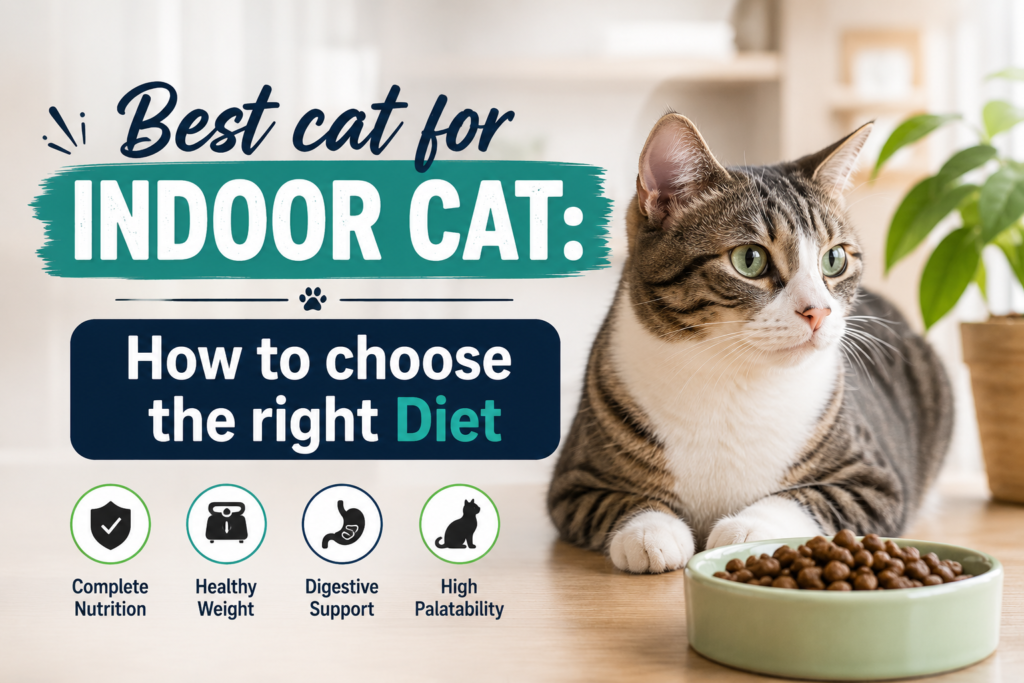
The best diet for an indoor cat is one that respects their carnivorous nature while adjusting for their relaxed lifestyle. Always transition to a new food slowly over a 7-to-10-day period to avoid upsetting your cat’s stomach, and consult your veterinarian to ensure the diet perfectly matches your pet’s unique health profile.